

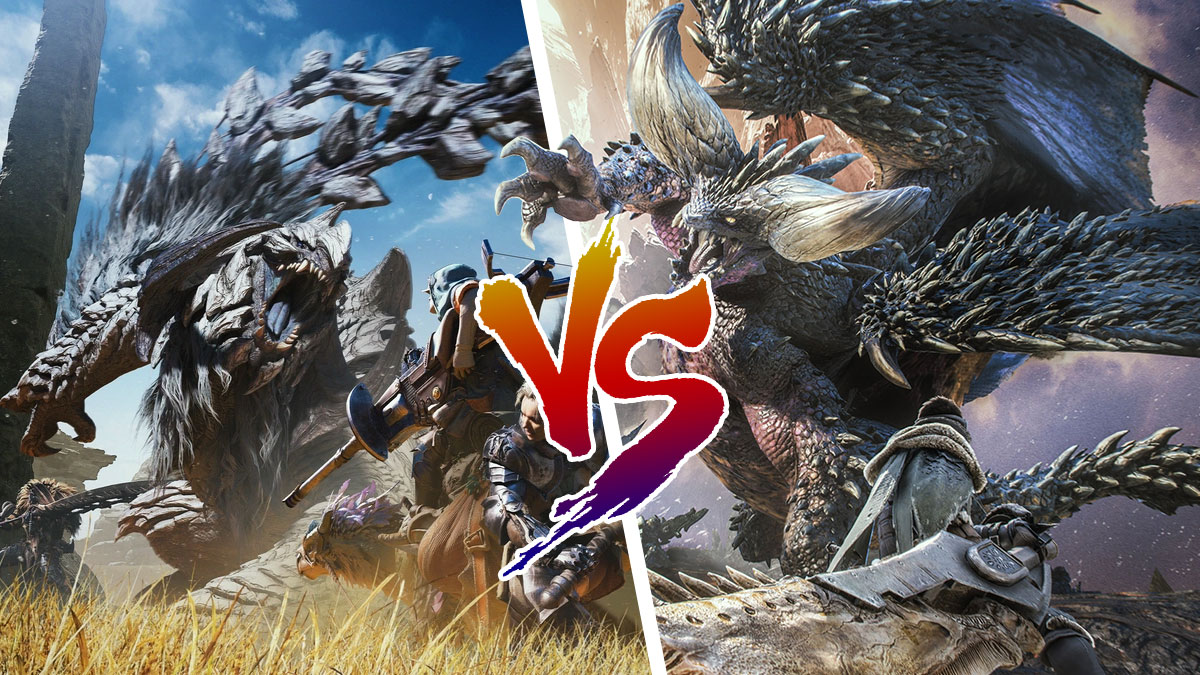
So, you’ve finally decided to dive into the Monster Hunter universe. Then comes the inevitable question: Should you pick up Monster Hunter World or Monster Hunter Wilds? On paper, the answer seems obvious. Wilds is the newest entry, so you should jump from there, right? But discussions and recommendations for World refuse to fade away. It becomes even trickier if your entire friend group is playing.
If you just want the TL;DR, personally, Monster Hunter World is the better game for newcomers. Still, thanks to crossplay, Wilds is an all-around better action RPG experience for modern platforms — provided your hardware can handle it.
| Pros | Cons | |
|---|---|---|
| Monster Hunter World | + Cheaper because it’s 10 years old + PC version is much lighter to run + Has an expansion pack + Has bigger monster roster + Has customizable house | – No crossplatform play – Clutch Claw mechanic could make combat too formulaic – Transmog opens in endgame Iceborne expansion |
| Monster Hunter Wilds | + Crossplatform across PC, PS5, Xbox + 100-player lobby + Combat is easier and faster to get into + Transmog opens halfway through the game + Has customizable camps | – Performance on PC is rough – No customizable house where you can display caught pets – Can’t give basic consumables to other players – Expansion pack hasn’t been released yet |
For more details on the comparisons, read on below where we compared both games across the categories that matter most. From price, how multiplayer works, gameplay, and even options for those who enjoy spending hours dressing up their characters.
Note that Monster Hunter World is available on PS4, Xbox One, and PC. While Monster Hunter Wilds is for PS5, Xbox Series X, and PC with an upcoming Switch 2 port.
Price: Monster Hunter World Leads on Value
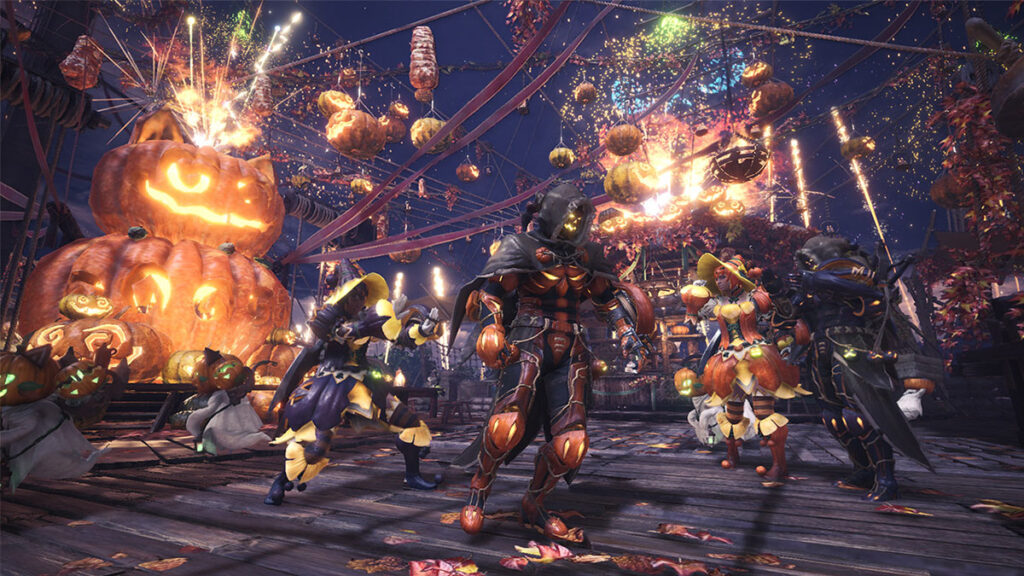
Winner: Monster Hunter World.
| Base Game | DLC Expansion | Bundle | |
|---|---|---|---|
| Monster Hunter World | $29.99 ($7.79 lowest) | Iceborne: $39.99 ($5.99 lowest) | $59.98 ($9.98 lowest) |
| Monster Hunter Wilds | $39.99 ($29.39 lowest) | Ascendance: N/A | N/A |
Even after Wilds received a permanent price reduction, Monster Hunter World remains the clear winner here. You’re getting a decade-old game with an expansion and a massive amount of content for less than Wilds‘ price. Especially when there’s a big discount.
Install Size & PC Performance: World Is Much Easier To Run
Winner: Monster Hunter World.
With storage prices and GPUs becoming increasingly expensive, hardware demands matter more than ever. With that in mind, if we’re strictly talking about numbers, the older World easily comes on top again.
- World + Iceborne: Around 50GB. However, it can reach 100GB if you want to use the High Resolution Texture Pack.
- Wilds: 58GB on consoles and was 70GB on PC. But since Title Update 4, the PC version requires around 110GB of free SSD space. Add another 70GB for the High Resolution texture.
It doesn’t help that Wilds is also one of Capcom’s most demanding PC games. The open beta test and its launch were heavily criticized by fans and critics alike. Even after several optimization patches, low-and mid-range PCs still need to lower their graphical settings. Or even install performance mods just to maintain stable frame rates.
One thing Wilds has over World, however, is the free Prologue Demo. It lets to-be Hunters benchmark their rig while also giving them a taste of the combat mechanics.
Multiplayer: Wilds Won, But It’s a Bit Complicated
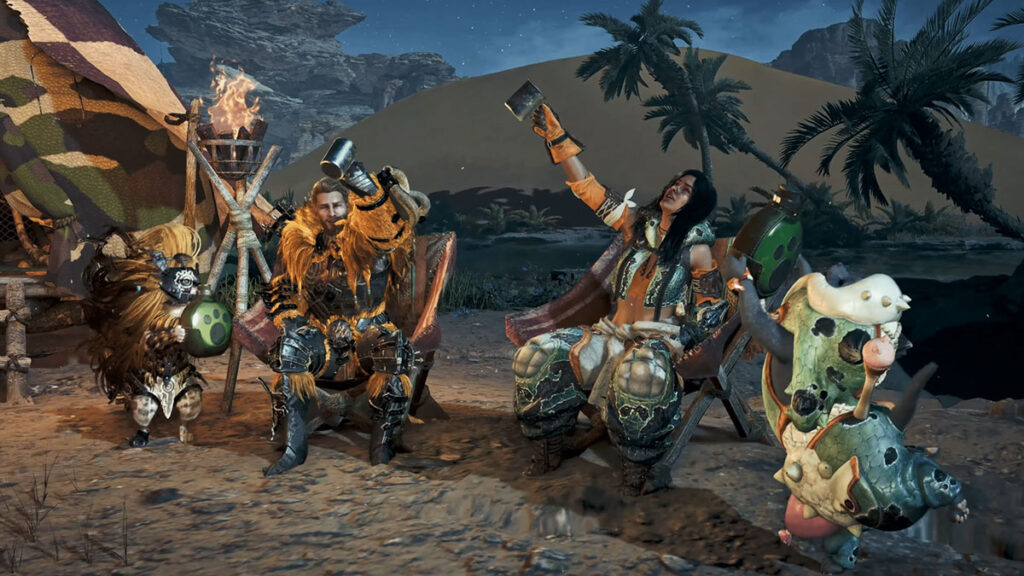
Winner: Monster Hunter Wilds.
The biggest advantage Monster Hunter Wilds has over World is undoubtedly its crossplatform multiplayer functionality. It’s the first time for the mainline games where PC, PlayStation 5, and Xbox Series X owners can finally all hunt together. The Nintendo Switch 2 version has been announced as well — although Capcom has yet to confirm whether it will support crossplay.
Once in-game, both World and Wilds let up to four Hunters tackle quests together. If your group is larger, you’ll have to rotate your party regardless of which game you choose. Outside of quests, though, Wilds adopts a more MMO-inspired approach. Lobbies now support up to 100 players, replacing World‘s 16-player Gathering Hub. While this makes the world feel more alive, it also loses some of the close-knit atmosphere older entries had.
In Wilds, you won’t receive a notification whenever someone in your lobby posts a quest. Instead, you’ll need to regularly check the quest list to see if anyone has started one. The exception is if you and your friends are in the same Link Party. Link Party members automatically receive quest notifications, can quickly join from the menu, and freely explore the map together between hunts. The only catch is that a Link Party is limited to four players.
World‘s lobby system is much simpler, but it comes with one infamous drawback. Assigned story quests cannot be joined until the host has watched the mandatory in-game cutscene. If you’re helping a lower-ranked friend, you’ll need to wait for them to trigger the cutscene before joining.
It’s even clunkier when everyone is progressing together. Each player must begin the Assigned Quest solo, watch the cutscene individually, then choose Return from Quest before regrouping. Be careful not to select Abandon Quest, though! Doing so resets your quest’s progress and forces you to re-trigger the cutscene.
For anyone planning to experience the story together, Wilds is a massive improvement.
Monster Roster: World and Iceborne Still Have the Numbers
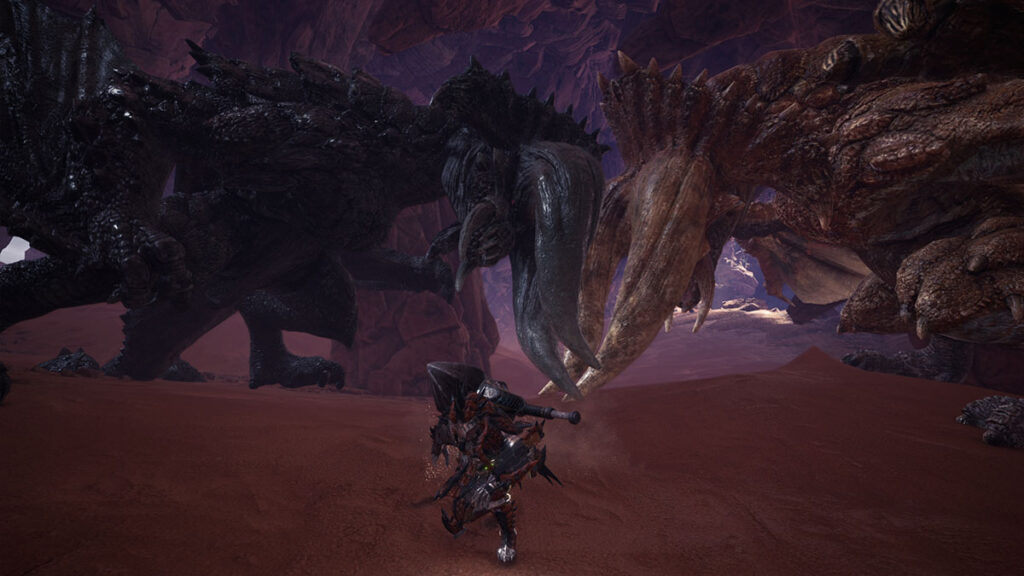
Winner: Monster Hunter World.
If sheer monster count matters most to you, then Monster Hunter World with the Iceborne expansion comes out ahead. The base game launched with around 30 Large Monsters, although most are Rathalos-like Flying Monsters. It then grew to 71 once Iceborne rolled in with more variety, giving it one of the deepest rosters in the series.
Wilds came out of the gate leaner, launching with ‘only’ 29 Large Monsters. Across four Title Updates since, it has expanded into 34 monsters, adding fan-favorites such as Gogmazios. Nevertheless, the Ascendance expansion that’s coming early next year will no doubt balloon that number.
Gameplay: World Clawed So Wilds Can Offset
Winner: Monster Hunter Wilds.
World reinvented Monster Hunter‘s combat with seamless maps, faster-paced movements, and the grappling hook-like Slinger. Iceborne then introduced the controversial Clutch Claw — which is retroactively added to base World. It lets Hunters grapple onto monsters, soften body parts, and slam them into walls for huge damage.
While undeniably powerful, many Hunters disliked how central these mechanics became. Softened parts dramatically affected damage calculations, while wallbangs were often too effective to ignore. Some weapons also integrated Clutch Claw much more naturally than others, notably Lance and Hammer.
Wilds keeps the Slinger but completely replaces Clutch Claw with mechanics that feel better woven into every weapon’s moveset. In turn, this also made the revamped wounding mechanics a more integrated part of the combat.
Focus Mode lets Hunters target weak points, while Focus Strikes destroy wounds for heavy damage and staggers. Meanwhile, Offset Attacks for half of the 13 weapons reward perfect timing with satisfying parries. Heavier and shielded weapons can do Power Clashes to physically overpower charging monsters. Only Long Sword and Dual Blades got neither of those.
The result is combat that feels fresh and exciting without forcing every weapon into the same Clutch Claw routine. The only obvious gameplay regression in Wilds is that Hunters can no longer give basic consumables to one another.
Style Customization: Wilds Won By Convenience
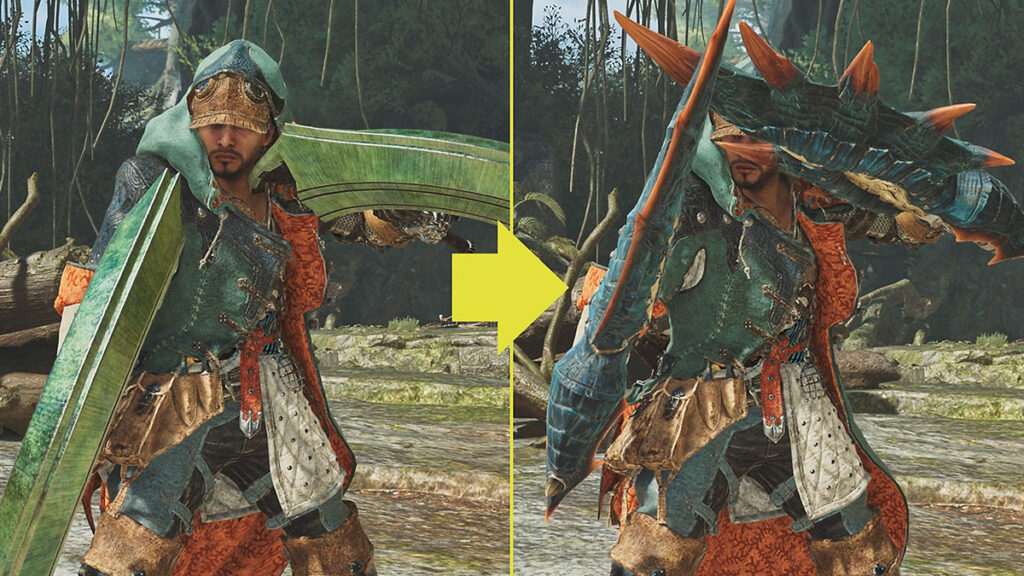
- Winner: Monster Hunter Wilds.
Fashion has always been the ‘true’ endgame for many Monster Hunter enthusiasts. But truth be told, both World and Wilds have been big downgrades in terms of armor customization.
World removed separate Blademaster and Gunner armor in favor of Alpha and Beta sets. While these variants feature different appearances and skill distributions, the visual differences often weren’t significant. Weapon designs also received criticism, with many simply sharing Iron and Bone models instead of completely unique designs like in older games. Brachydios’ Dual Blades (in)famously became the poster child for this problem, with fans joking they looked like oversized drumsticks.
To make things worse, Wilds simplifies things even further. Alpha and Beta armor are now visually identical, differing only in Decoration slots and passive skills. Fortunately, both games include Layered Armor and Layered Weapons. This transmogrifier system allows Hunters to use one appearance while keeping another set’s stats.
In base World, Layered Armor is mostly limited to Event Quest rewards. Iceborne expands the system, but crafting layered gear requires endgame Master Rank materials. Wilds is more generous, as Layered Armor and Weapons become available shortly after reaching High Rank. Every crafted High Rank armor piece can also immediately be used as Layered.
Verdict: And The Winner Is…?
Choose Monster Hunter World if you’re on older hardware or simply want to hunt various monsters for the lowest possible price. Even years later, World with Iceborne remains one of the best-value action RPGs on the market. Choose Monster Hunter Wilds if you have a beefy PC and your priority is playing with friends. It comes with crossplay, streamlined multiplayer, and refined combat.
Ultimately, the answer comes down to your hardware and your wallet. Whichever one you pick, though, chances are you’ll end up sinking hundreds of hours into the hunts.
